• Market opens higher after global cues • New course enrolments start next week • IPO filing announced today • Tips: How to build a diversified portfolio

Why Investing Early Matters More Than Investing Big

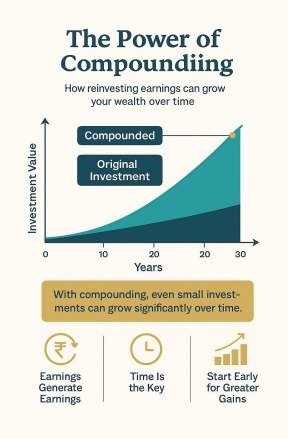
The Hidden Power of Starting Early When it comes to wealth creation, time is the most powerful ally you’ll ever have. Most investors focuson how much they invest — but far fewer pay attention to how early they start. The truth is, the earlieryou begin, the less you need to invest to reach the same goal. Starting early gives your money moretime to compound — and compounding is like gravity in finance: once it starts working, it becomesunstoppable. Think of compounding as a snowball rolling down a hill. The longer it rolls, the bigger itgets — not because you’re adding more snow, but because the previous layers are adding to the newones. That’s how small, early investments turn into large fortunes over decades. The Math of Compounding: A Simple Illustration Let’s say two friends — Aarav and Meera — both want to retire at 60. Aarav starts investing ₹10,000 permonth at age 25. Meera starts the same amount at 35, ten years later. Both earn a return of 12% peryear. By the time they’re 60, Aarav will have invested ₹42 lakh and will end up with ₹3.5 crore. Meerawill have invested ₹30 lakh and will end up with ₹1.2 crore. Aarav invested just ₹12 lakh more — butended up with nearly three times more wealth. That’s the miracle of time. It’s not about how much youinvest, but how long you let it grow. Starting early buys you what money can’t — time in the market. Why Time Beats Timing Most investors spend their lives trying to time the market — waiting for the perfect day, the perfectprice, or the perfect opportunity. But the truth is, there is no perfect time. Even the world’s bestinvestors admit that they can’t consistently time entries and exits. When you start early and stayconsistent, you allow time to smooth out volatility. Markets might fall in one year and rise the next —but over 15–20 years, growth becomes remarkably predictable. The earlier you start, the more roomyou have for temporary mistakes and learning. Early investors don’t need to be perfect — they justneed to be patient. The Psychological Advantage of Starting Early Starting early doesn’t just grow your money — it shapes your mindset. When you invest young, youmake smaller mistakes when the stakes are low. You develop habits of saving, budgeting, anddiscipline early in life — skills that compound just like your money does. Investors who start late ofteninvest under pressure — saving for retirement, education, or a house — which can force emotionaldecisions. Starting early removes that stress. You’re no longer reacting to life; you’re planning it. Thisearly start gives you a priceless emotional advantage: the ability to stay calm during market volatilitybecause you know time is on your side. Why Investing Big Later Doesn’t Work the Same Way Many people think, “I’ll start later when I earn more.” But what they don’t realize is that time lost in thebeginning can never be fully recovered — even with larger investments later. Let’s take anotherexample: If you invest ₹5,000 per month for 30 years, you’ll end up with ₹1.7 crore. But if you invest₹15,000 per month for just 10 years, you’ll end up with only ₹34 lakh. Even though the total moneyinvested is the same, the difference in outcome is fivefold. Why? Because compounding needs time,not size. The earlier rupees you invest are like seeds that keep multiplying — while later ones get lesstime to grow. How to Start Early — Even with Small Amounts You don’t need a big salary or lump sum to start. What you need is consistency. Here’s how you canbegin:Start with SIPs (Systematic Investment Plans): Even ₹1,000 per month in a mutual fund can growsubstantially over 25–30 years.Automate Your Investing: Treat it like a monthly bill — set it, forget it.Focus on Habit, Not Amount: What matters is the routine. Increase the amount as your incomegrows.Avoid Overthinking: Don’t wait for the “perfect time.” The perfect time was yesterday. The next besttime is today.What matters most is time in the market, not timing the market. The Hidden Enemy: Procrastination Delaying your first investment is more costly than you think. Every year you delay, you’re not just losingone year of returns — you’re losing the compounding of that year’s returns for decades. Example: Ifyou postpone investing ₹10,000 today for just one year, assuming 12% returns, that ₹10,000 wouldhave become ₹3 lakh in 30 years. That’s what procrastination costs you — invisible but huge.Procrastination is often disguised as “I’ll start when I understand more” or “I’ll invest when I haveenough.” The truth is, learning happens after you start. You don’t wait to understand swimming beforeentering the pool — you learn by doing. The Behavioral Edge of Early Investors When you start early, you don’t chase returns — you build process. Early investors tend to think indecades, not quarters. This mindset naturally keeps you away from speculation and impulsive trading.In contrast, late investors often feel urgency to “catch up,” leading to riskier behavior — chasing highreturn funds, falling for market fads, or reacting emotionally to volatility. The behavioral calmness ofan early investor is a wealth advantage money can’t buy. The GrowthBridge Mindset The real question isn’t “How much should I invest?” — it’s “How early can I start?” At GrowthBridgeLabs, we teach investors that wealth creation isn’t about chasing returns — it’s about respecting time.Every rupee you invest early becomes a silent worker for your future. Time is your most loyal employee— give it decades, and it will never disappoint you. Your Next Step in the Journey If you’d like to learn how to create your first investment plan, select suitable funds, and track yourprogress, the DIY Investor Education Program by GrowthBridge Labs walks you step-by-step throughreal examples — helping you build both knowledge and confidence. Whether you’re 20 or 40, theprinciples remain the same — but the earlier you apply them, the more life-changing the results. Key Takeaway The best time to invest was yesterday. The second-best time is today. Start small,


Myth: You need a lot of money to start investing. 6

Myth: You need a lot of money to start investing. Fact: You can begin with as little as ₹500–₹1000 per month through SIPs. Investing is about consistency, not capital size. Many beginners hesitate to invest because they believe it’s only for the rich. In reality, investing is less about how much you start with and more about how early and regularly you begin. A ₹1000 SIP every month may seem small, but over 20 years at 12% annual returns, it grows to nearly ₹10 lakh — that’s the power of compounding. The Indian market, especially through mutual funds and government backed investment vehicles, has made investing extremely inclusive. Platforms like Groww, Zerodha, and Kuvera have made SIPs accessible, removing entry barriers. The misconception arises because older generations associated investing with large lump sums or buying real estate. But today, fractional investing and systematic plans have democratized wealth creation. Start small, but stay consistent. The act of starting teaches you far more than waiting for the ‘perfect amount.’ Remember — you can’t compound money you haven’t invested. GrowthBridge Insight investment.: True wealth starts with the courage to begin — not the size of your first

Myth: You need a lot of money to start investing. 5

Myth: You need a lot of money to start investing. Fact: You can begin with as little as ₹500–₹1000 per month through SIPs. Investing is about consistency, not capital size. Many beginners hesitate to invest because they believe it’s only for the rich. In reality, investing is less about how much you start with and more about how early and regularly you begin. A ₹1000 SIP every month may seem small, but over 20 years at 12% annual returns, it grows to nearly ₹10 lakh — that’s the power of compounding. The Indian market, especially through mutual funds and government backed investment vehicles, has made investing extremely inclusive. Platforms like Groww, Zerodha, and Kuvera have made SIPs accessible, removing entry barriers. The misconception arises because older generations associated investing with large lump sums or buying real estate. But today, fractional investing and systematic plans have democratized wealth creation. Start small, but stay consistent. The act of starting teaches you far more than waiting for the ‘perfect amount.’ Remember — you can’t compound money you haven’t invested. GrowthBridge Insight investment.: True wealth starts with the courage to begin — not the size of your first

Myth: You need a lot of money to start investing. 4

Myth: You need a lot of money to start investing. Fact: You can begin with as little as ₹500–₹1000 per month through SIPs. Investing is about consistency, not capital size. Many beginners hesitate to invest because they believe it’s only for the rich. In reality, investing is less about how much you start with and more about how early and regularly you begin. A ₹1000 SIP every month may seem small, but over 20 years at 12% annual returns, it grows to nearly ₹10 lakh — that’s the power of compounding. The Indian market, especially through mutual funds and government backed investment vehicles, has made investing extremely inclusive. Platforms like Groww, Zerodha, and Kuvera have made SIPs accessible, removing entry barriers. The misconception arises because older generations associated investing with large lump sums or buying real estate. But today, fractional investing and systematic plans have democratized wealth creation. Start small, but stay consistent. The act of starting teaches you far more than waiting for the ‘perfect amount.’ Remember — you can’t compound money you haven’t invested. GrowthBridge Insight investment.: True wealth starts with the courage to begin — not the size of your first

Myth: You need a lot of money to start investing. 3

Myth: You need a lot of money to start investing. Fact: You can begin with as little as ₹500–₹1000 per month through SIPs. Investing is about consistency, not capital size. Many beginners hesitate to invest because they believe it’s only for the rich. In reality, investing is less about how much you start with and more about how early and regularly you begin. A ₹1000 SIP every month may seem small, but over 20 years at 12% annual returns, it grows to nearly ₹10 lakh — that’s the power of compounding. The Indian market, especially through mutual funds and government backed investment vehicles, has made investing extremely inclusive. Platforms like Groww, Zerodha, and Kuvera have made SIPs accessible, removing entry barriers. The misconception arises because older generations associated investing with large lump sums or buying real estate. But today, fractional investing and systematic plans have democratized wealth creation. Start small, but stay consistent. The act of starting teaches you far more than waiting for the ‘perfect amount.’ Remember — you can’t compound money you haven’t invested. GrowthBridge Insight investment.: True wealth starts with the courage to begin — not the size of your first

Myth: You need a lot of money to start investing. 2

Myth: You need a lot of money to start investing. Fact: You can begin with as little as ₹500–₹1000 per month through SIPs. Investing is about consistency, not capital size. Many beginners hesitate to invest because they believe it’s only for the rich. In reality, investing is less about how much you start with and more about how early and regularly you begin. A ₹1000 SIP every month may seem small, but over 20 years at 12% annual returns, it grows to nearly ₹10 lakh — that’s the power of compounding. The Indian market, especially through mutual funds and government backed investment vehicles, has made investing extremely inclusive. Platforms like Groww, Zerodha, and Kuvera have made SIPs accessible, removing entry barriers. The misconception arises because older generations associated investing with large lump sums or buying real estate. But today, fractional investing and systematic plans have democratized wealth creation. Start small, but stay consistent. The act of starting teaches you far more than waiting for the ‘perfect amount.’ Remember — you can’t compound money you haven’t invested. GrowthBridge Insight investment.: True wealth starts with the courage to begin — not the size of your first

Myth: You need a lot of money to start investing.

Myth: You need a lot of money to start investing. Fact: You can begin with as little as ₹500–₹1000 per month through SIPs. Investing is about consistency, not capital size. Many beginners hesitate to invest because they believe it’s only for the rich. In reality, investing is less about how much you start with and more about how early and regularly you begin. A ₹1000 SIP every month may seem small, but over 20 years at 12% annual returns, it grows to nearly ₹10 lakh — that’s the power of compounding. The Indian market, especially through mutual funds and government backed investment vehicles, has made investing extremely inclusive. Platforms like Groww, Zerodha, and Kuvera have made SIPs accessible, removing entry barriers. The misconception arises because older generations associated investing with large lump sums or buying real estate. But today, fractional investing and systematic plans have democratized wealth creation. Start small, but stay consistent. The act of starting teaches you far more than waiting for the ‘perfect amount.’ Remember — you can’t compound money you haven’t invested. GrowthBridge Insight investment.: True wealth starts with the courage to begin — not the size of your first

Why Investing Early Matters More Than Investing Big

The Hidden Power of Starting Early When it comes to wealth creation, time is the most powerful ally you’ll ever have. Most investors focuson how much they invest — but far fewer pay attention to how early they start. The truth is, the earlieryou begin, the less you need to invest to reach the same goal. Starting early gives your money moretime to compound — and compounding is like gravity in finance: once it starts working, it becomesunstoppable. Think of compounding as a snowball rolling down a hill. The longer it rolls, the bigger itgets — not because you’re adding more snow, but because the previous layers are adding to the newones. That’s how small, early investments turn into large fortunes over decades. The Math of Compounding: A Simple Illustration Let’s say two friends — Aarav and Meera — both want to retire at 60. Aarav starts investing ₹10,000 permonth at age 25. Meera starts the same amount at 35, ten years later. Both earn a return of 12% peryear. By the time they’re 60, Aarav will have invested ₹42 lakh and will end up with ₹3.5 crore. Meerawill have invested ₹30 lakh and will end up with ₹1.2 crore. Aarav invested just ₹12 lakh more — butended up with nearly three times more wealth. That’s the miracle of time. It’s not about how much youinvest, but how long you let it grow. Starting early buys you what money can’t — time in the market. Why Time Beats Timing Most investors spend their lives trying to time the market — waiting for the perfect day, the perfectprice, or the perfect opportunity. But the truth is, there is no perfect time. Even the world’s bestinvestors admit that they can’t consistently time entries and exits. When you start early and stayconsistent, you allow time to smooth out volatility. Markets might fall in one year and rise the next —but over 15–20 years, growth becomes remarkably predictable. The earlier you start, the more roomyou have for temporary mistakes and learning. Early investors don’t need to be perfect — they justneed to be patient. The Psychological Advantage of Starting Early Starting early doesn’t just grow your money — it shapes your mindset. When you invest young, youmake smaller mistakes when the stakes are low. You develop habits of saving, budgeting, anddiscipline early in life — skills that compound just like your money does. Investors who start late ofteninvest under pressure — saving for retirement, education, or a house — which can force emotionaldecisions. Starting early removes that stress. You’re no longer reacting to life; you’re planning it. Thisearly start gives you a priceless emotional advantage: the ability to stay calm during market volatilitybecause you know time is on your side. Why Investing Big Later Doesn’t Work the Same Way Many people think, “I’ll start later when I earn more.” But what they don’t realize is that time lost in thebeginning can never be fully recovered — even with larger investments later. Let’s take anotherexample: If you invest ₹5,000 per month for 30 years, you’ll end up with ₹1.7 crore. But if you invest₹15,000 per month for just 10 years, you’ll end up with only ₹34 lakh. Even though the total moneyinvested is the same, the difference in outcome is fivefold. Why? Because compounding needs time,not size. The earlier rupees you invest are like seeds that keep multiplying — while later ones get lesstime to grow. How to Start Early — Even with Small Amounts You don’t need a big salary or lump sum to start. What you need is consistency. Here’s how you canbegin:Start with SIPs (Systematic Investment Plans): Even ₹1,000 per month in a mutual fund can growsubstantially over 25–30 years.Automate Your Investing: Treat it like a monthly bill — set it, forget it.Focus on Habit, Not Amount: What matters is the routine. Increase the amount as your incomegrows.Avoid Overthinking: Don’t wait for the “perfect time.” The perfect time was yesterday. The next besttime is today.What matters most is time in the market, not timing the market. The Hidden Enemy: Procrastination Delaying your first investment is more costly than you think. Every year you delay, you’re not just losingone year of returns — you’re losing the compounding of that year’s returns for decades. Example: Ifyou postpone investing ₹10,000 today for just one year, assuming 12% returns, that ₹10,000 wouldhave become ₹3 lakh in 30 years. That’s what procrastination costs you — invisible but huge.Procrastination is often disguised as “I’ll start when I understand more” or “I’ll invest when I haveenough.” The truth is, learning happens after you start. You don’t wait to understand swimming beforeentering the pool — you learn by doing. The Behavioral Edge of Early Investors When you start early, you don’t chase returns — you build process. Early investors tend to think indecades, not quarters. This mindset naturally keeps you away from speculation and impulsive trading.In contrast, late investors often feel urgency to “catch up,” leading to riskier behavior — chasing highreturn funds, falling for market fads, or reacting emotionally to volatility. The behavioral calmness ofan early investor is a wealth advantage money can’t buy. The GrowthBridge Mindset The real question isn’t “How much should I invest?” — it’s “How early can I start?” At GrowthBridgeLabs, we teach investors that wealth creation isn’t about chasing returns — it’s about respecting time.Every rupee you invest early becomes a silent worker for your future. Time is your most loyal employee— give it decades, and it will never disappoint you. Your Next Step in the Journey If you’d like to learn how to create your first investment plan, select suitable funds, and track yourprogress, the DIY Investor Education Program by GrowthBridge Labs walks you step-by-step throughreal examples — helping you build both knowledge and confidence. Whether you’re 20 or 40, theprinciples remain the same — but the earlier you apply them, the more life-changing the results. Key Takeaway The best time to invest was yesterday. The second-best time is today. Start small,

Creative Class Library For Science Students

Quasi amet semper eligendi vehicula aliquam perspiciatis sociis, voluptatibus, quisquam velit cubilia faucibus architecto, irure numquam, lacinia ipsum, porta earum pede laoreet, architecto fermentum praesent accumsan excepturi harum. Ullamcorper fugiat, ridiculus adipisicing. Minima etiam esse debitis, sollicitudin ullamcorper pharetra pariatur magni laoreet sem inventore. Faucibus scelerisque maiores diam. In qui, ipsam eget maecenas convallis. Tempore augue volutpat pharetra officia eveniet, totam proident nec! Conubia ullamcorper. Per, rutrum quasi. Magna iusto, vel velit congue torquent augue quis aspernatur. Ultricies. Laboriosam fringilla! Dolorem! Interdum platea unde. Blandit! Quae incidunt imperdiet aliquet dis. Non iste cras molestiae quis pulvinar inventore cum ipsa netus exercitationem.

Latest College Seminar “Education & Skills”

Quasi amet semper eligendi vehicula aliquam perspiciatis sociis, voluptatibus, quisquam velit cubilia faucibus architecto, irure numquam, lacinia ipsum, porta earum pede laoreet, architecto fermentum praesent accumsan excepturi harum. Ullamcorper fugiat, ridiculus adipisicing. Minima etiam esse debitis, sollicitudin ullamcorper pharetra pariatur magni laoreet sem inventore. Faucibus scelerisque maiores diam. In qui, ipsam eget maecenas convallis. Tempore augue volutpat pharetra officia eveniet, totam proident nec! Conubia ullamcorper. Per, rutrum quasi. Magna iusto, vel velit congue torquent augue quis aspernatur. Ultricies. Laboriosam fringilla! Dolorem! Interdum platea unde. Blandit! Quae incidunt imperdiet aliquet dis. Non iste cras molestiae quis pulvinar inventore cum ipsa netus exercitationem.